Get marketing insights first
Subscribe for actionable strategies, growth tips and useful industry insights, delivered straight to your inbox.
Jira · Jira Service Management · Confluence
A practical operating model for connecting every promise made before day one with every access, asset and obligation that must be closed on the last day.

The coordination problem
Onboarding and offboarding rarely fail because nobody cares. They fail because ownership, timing and evidence are spread across inboxes, spreadsheets, chat messages and people’s memories.
Joining · Experience risk
The employee sees a slow welcome. The organisation inherits avoidable support work and access risk.
Leaving · Control risk
The person has left, but the organisation may still carry their access, assets and unresolved obligations.
The lifecycle spine
Create the employee service record when the hire is approved, enrich it through every role change and use that same record to drive the exit. The data collected on the way in becomes the exact control list on the way out.
Role, manager, start date and location confirmed.
Identity, access, equipment and space requested.
Ready-to-work checks and welcome experience.
Moves, promotions, leave and new entitlements.
Last day, owner and risk level locked.
Access closed, assets recovered, work handed over.
Evidence retained and final review approved.
Jira Service Management becomes the coordination spine. It does not replace HR, identity, asset or payroll systems. It gives cross-functional work a structured request, visible owners, service targets, automation and a defensible completion trail.
Run onboarding in parallel
The manager supplies the minimum complete brief once. Automation creates the right checklists for HR, IT and the workplace team—each with a clear owner and a due date tied to the employee’s start.
Lane 01 · People / HR
Lane 02 · IT / Security
Lane 03 · Manager / Workplace
Final review is a workflow gate, not a courtesy click. The parent request cannot close until every mandatory lane has completed its evidence-backed checklist.
Closure blocked until completeThe knowledge layer
Confluence can hold the employee-facing answers, manager playbooks, role guides and handover templates. Jira tracks the work; Confluence explains how to do it well.
The useful connection is contextual: surface the right article from the request, keep policy ownership visible and turn repeated service questions into knowledge improvements.
Every critical guide has an accountable owner and a review date.
New hires see the information for their role, location and employment type.
Search gaps and recurring questions create a visible content improvement backlog.
Customer, project and operational knowledge is reassigned before access is revoked.
What this looks like in Atlassian
Atlassian’s HR service management patterns support onboarding and offboarding request types, team queues, forms, knowledge and automation. The operating model—not the template alone—is what turns those capabilities into a reliable lifecycle.
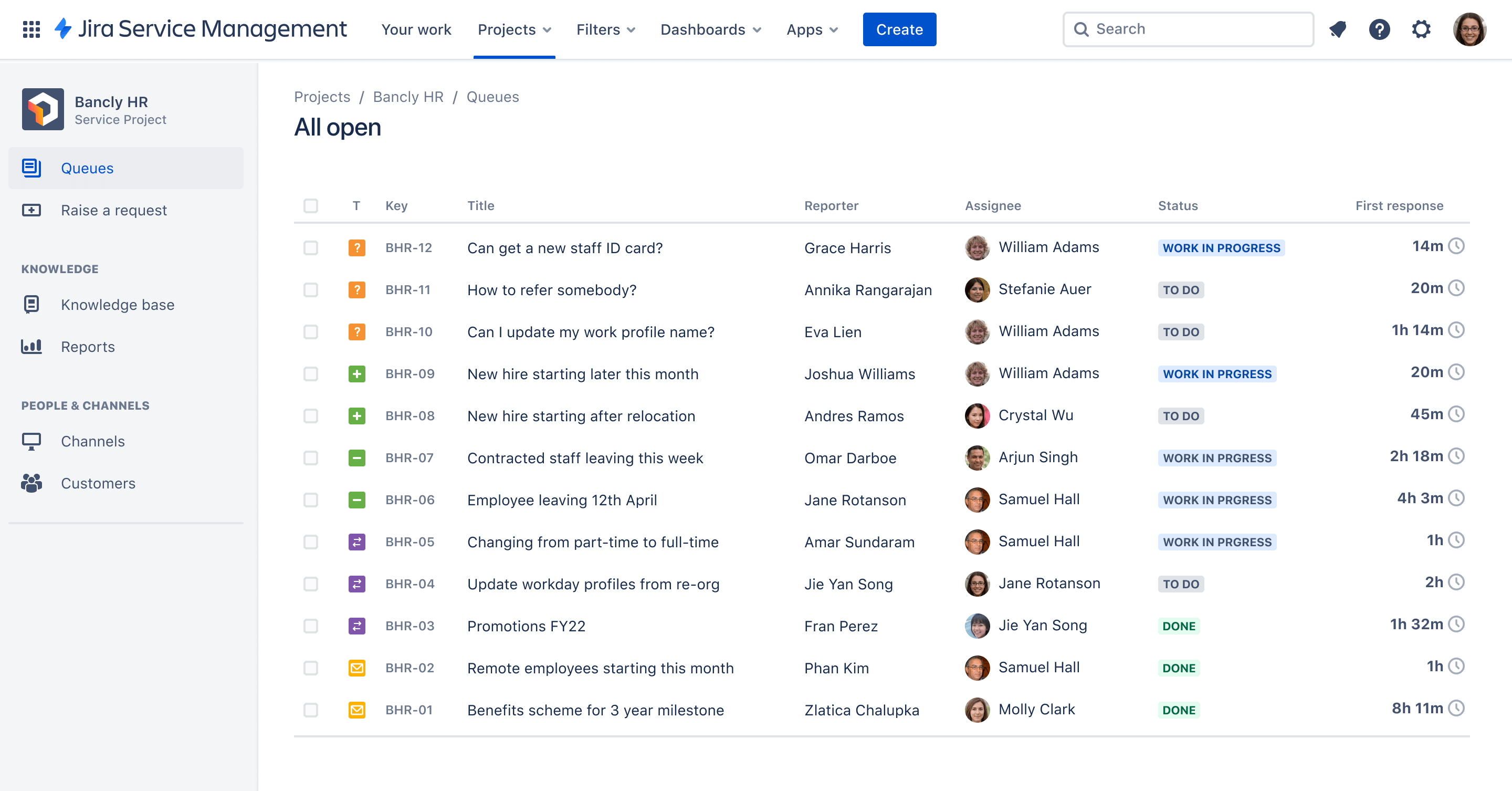
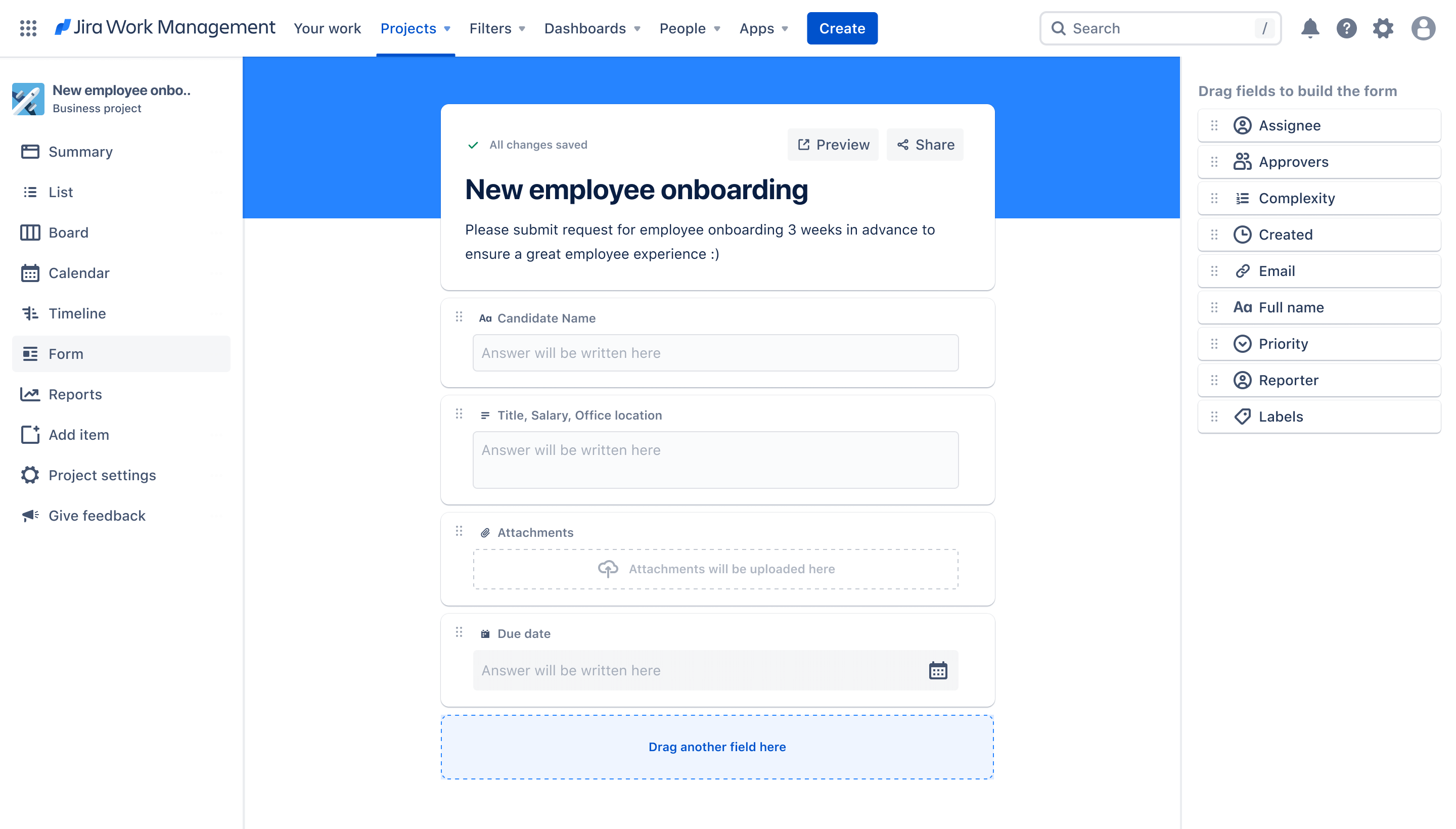
Real-world signal: Atlassian reports that Vuori built more than 75 automations across the employee lifecycle and estimated saving 100 workdays in one year. The transferable lesson is not the number—it is that a consistent request model makes safe automation possible.

Run the controlled reverse
The offboarding workflow should be generated from what the organisation already knows: the person’s manager, applications, groups, devices, building access, responsibilities and data obligations.
Lock the trigger. Confirm the authoritative last day, time, departure type and named coordinator.
Protect access. Sequence identity suspension, privileged access removal, SaaS revocation and shared-secret rotation.
Recover assets. Assign return owners, record condition, confirm sanitisation and resolve exceptions.
Transfer knowledge. Reassign customers, approvals, files, project ownership and operational duties before cutoff.
Close with evidence. Keep the parent request open until mandatory tasks, exceptions and the final review are complete.
| Lifecycle moment | Minimum record | Accountable owner | Completion evidence |
|---|---|---|---|
| Hire approved | Legal name, role, manager, location, worker type, start date | Hiring manager + HR | Approved request with required fields |
| Provision | Role profile, application bundle, groups, device, site access | IT + Security + Workplace | Provisioning tasks linked to the person record |
| Ready for day one | Equipment delivered, identity tested, induction and calendar ready | Lifecycle coordinator | Mandatory readiness checks passed |
| Employee change | New role, manager, location or employment condition and effective date | HR + New manager | Old entitlements reviewed; new ones approved |
| Departure | Last day/time, risk profile, current assets, access and responsibilities | Manager + HR + Security | Revoke, return and handover work generated |
| Final closure | Exceptions, evidence links, retention decision and reviewer | Lifecycle coordinator | Validator passed and final review approved |
A focused 90-day rollout
Do not automate an undocumented process. Establish ownership and completion rules first, then automate the stable path and expose exceptions.
Days 1–30 · Map
Days 31–60 · Pilot
Days 61–90 · Improve
The strategic shift
The strongest employee experience is not a polished welcome email or a longer exit checklist. It is a connected operating model in which every team knows what it owns, every transition carries context and closure means the work is genuinely complete.
Map your employee lifecycle workflowPractical ideas for connected customer journeys, digital systems and better work across APAC.