Get marketing insights first
Subscribe for actionable strategies, growth tips and useful industry insights, delivered straight to your inbox.
A practical Jira Service Management blueprint for electronics and general product sellers—designed around customer intent, product safety and a clean line from first contact to fulfilment.


The customer sees one problem. Behind it may sit an order platform, warehouse, carrier, repair bench, manufacturer, payment provider, privacy team or product-safety response.
The service desk should be the accountable case layer that holds the customer promise together—without pretending it is the system of record for every downstream action.
The record for communication, ownership, SLA, consent and closure evidence.
The fulfilment work in ERP, WMS, carrier, repair, refund or engineering systems.
Recurring symptoms link to a problem, defect, supplier action or recall master record.
Use customer language and group by intent. Brand, store, region, department and product category are usually fields—not more request types.
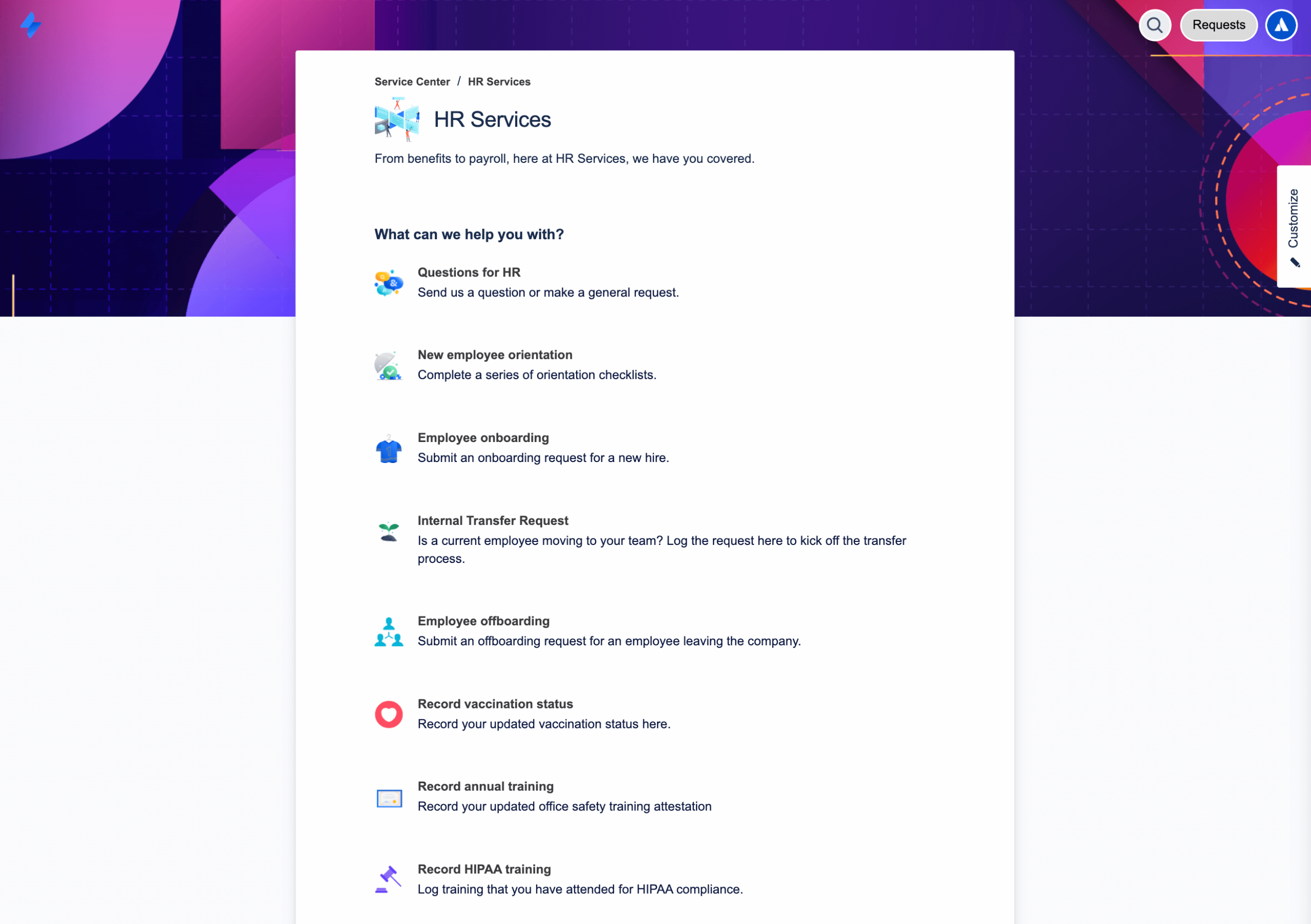
Create a separate request type only when the intent needs materially different questions, routing, workflow, SLA, permissions or reporting.
The guide recommends 18 request types at maturity, with 12 in the MVP. Expand only when the data proves a separate experience is justified.
Route by intent, calculate urgency internally, make waiting states explicit and close only with evidence. That creates service data the business can trust.
Portal first; email, phone and messaging captured into the same case model.
Customer intent sets the right questions, form and routing rules.
Owner, communication, SLA, consent, decisions and closure evidence.
ERP, warehouse, carrier, repair, finance, privacy and engineering work.
Resolved learning becomes self-service; recurring cases become product signals.
Fast help, guided diagnostics and knowledge.
Verification, finance action and confirmation.
Carrier evidence, trace, recovery and update.
Eligibility, assessment, remedy and logistics.
Identity, restricted handling and auditable response.
Clear ownership, fair resolution and learning.
Immediate escalation, restricted access and regulatory decision path.
Aim for five to seven visible questions, then reveal conditional fields only when the answer changes the path. Keep agent-only diagnostics, decisions and evidence off the customer form.

Stop-use guidance, priority calculation and a restricted escalation path must happen immediately.
Automation should protect service standards: acknowledge, classify, route, warn, escalate and connect records. Remedy decisions still need accountable people.
| Priority | Business meaning | First response design |
|---|---|---|
| P1 · Critical | Immediate safety or severe business impact | Minutes, 24/7 path where required |
| P2 · High | Significant impact or time-critical failure | Fast business-hours response |
| P3 · Normal | Standard product, order or service request | Published service target |
| P4 · Low | Advice, feedback or low-impact request | Planned response window |
The standard works only when customer experience, operational control and regulatory obligations are designed together.
Hazard signals trigger stop-use guidance and specialist review before entitlement or commercial remedy.
Internal warranty wording must not be used to narrow mandatory consumer rights or complaint pathways.
Collect only what is needed, restrict privacy and safety cases, and keep credentials out of tickets.
Record the outcome, customer message, fulfilment proof, linked master record and knowledge opportunity.
Australian implementation note: map the design to current consumer, privacy and product-safety obligations with qualified legal and compliance owners. This article is an operating-model guide, not legal advice.
Start with the minimum coherent model, prove the risky paths, then use real demand and quality signals to tune the design.
DesignEpic can translate the standard into Jira Service Management configuration, integration decisions, governance and a tested rollout plan.
Practical ideas for connected customer journeys, digital systems and better work across APAC.